Another instrument for the wall
September 12, 2026
When I sent out my first newsletter earlier this month, I received a few comments on the Instruments Wishlist post I made, one of which was from my wife.
“Hey, don’t you actually have an erhu?”
“I do now!”
The universe has a funny way of responding when you call out into the void. Could it be a response that remedies global conflict, humanitarian crises, and human rights violations? I sure wish it would, but last month, it decided to respond to my call for an erhu.
The House of Musical Tradition, who I also happened to mention in that post, advertised on their Instagram account two beginner-level erhus that had come into its possession. Both were under $200, including the shipping costs, came with bows and cases, and in perfect working order.
Considering that I’m still kicking myself for passing up their $4,000+ viola d’amores, I had one purchased within the hour.
It came a few days later, in one piece.
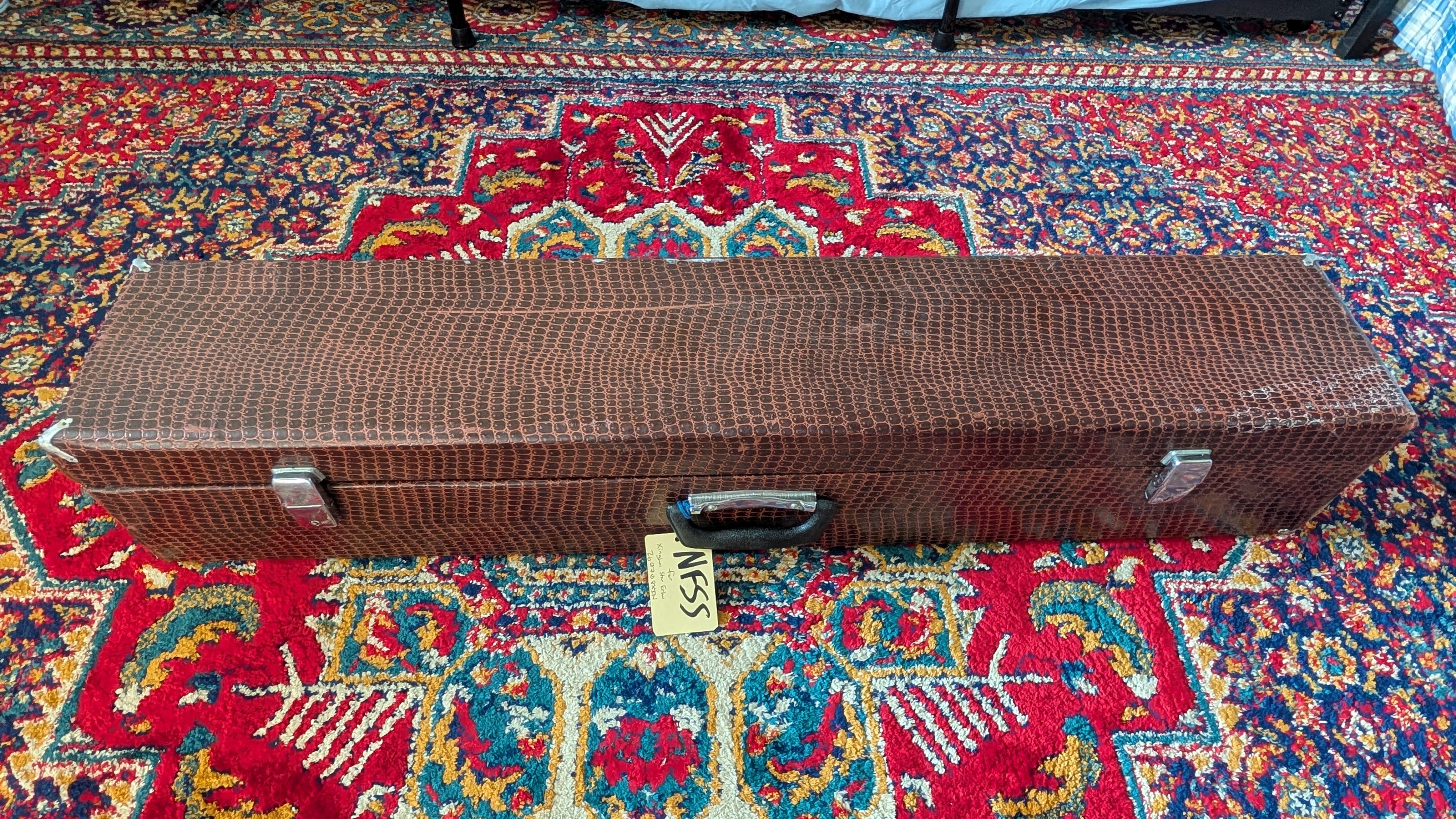
So now I have an erhu
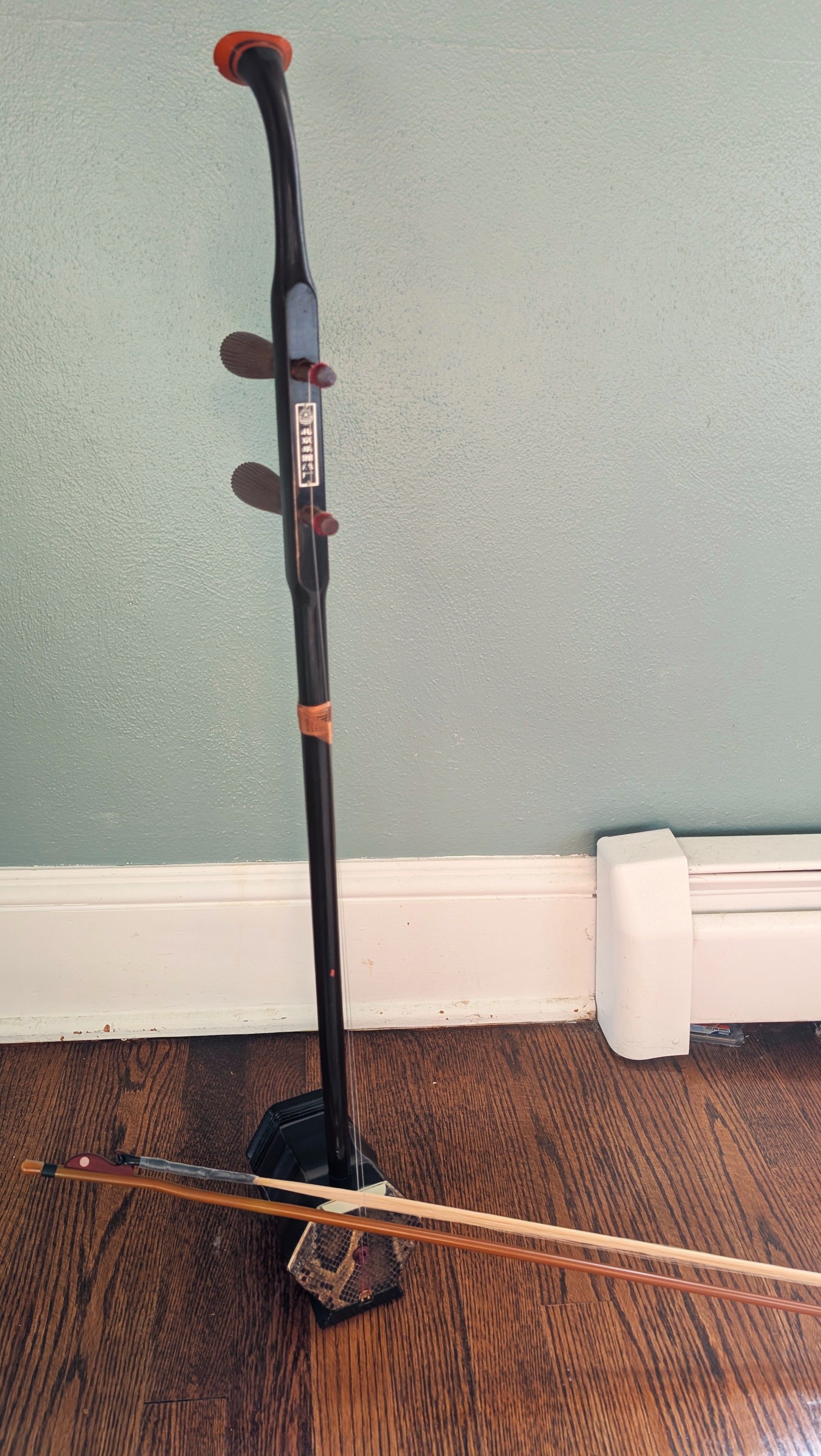
I was, at first, rather surprised at how easy it was to set up — surprised because everything related to the strings was kind of a mess. As it kind of should? Mailing string instruments with strings taught is asking for trouble. So it made sense that it’d come with strings unraveled. This also meant, however, that the bridge (the piece that holds up the strings on the body of the instrument) had fallen off and needed to be reassembled and tuned.
The surprising part was actually how well I already understood this instrument, which I’d never touched before, purely from my experiences with violins/violas.
Like a violin bridge, the erhu bridge is kept on the body purely through string tension. I simply had to rewind the strings on to the pegs (a youtube video helped me to see which way to turn them), and slide the bridge beneath them as I began to tune. Tuning was as simple as tuning with pegs on a violin (maybe even easier, to be honest, there’s just two strings and the pegs are chunky).
The bow (the stick with the hair) is also surprisingly similar to a violin bow, with the exact same kind of screw at the end of the frog (the base of the bow) to tighten and loosen. It’s merely shaped a bit different to allow for more room and flexibility, for reasons I’ll cover below. It even uses the same rosin for the bow hair as a violin (rosin is a kind of resin you glide across the hair to make it sticky enough to actually produce vibrations on the string).
As long as I’ve known about erhus, my biggest question has been how the heck does this bow work??, and having one in my hand while following videos finally alleviated the mystery.
I mentioned in that Instruments post that you thread the bow between the two strings. Many erhu bows are designed, evidently, with this threading process in mind, including mine: rather than be firmly wedged into the frog, the horse hair on my erhu bow ends at a rubber loop, which you can hook on and off the frog. This makes it easier to un-attach the hair (rather than dismantling the frog, as you would with a violin bow) to gently pull it between the strings before reattaching it.
And then what? Logic always told me that a setup like this would result in the bow playing both strings at once. How are people only playing one string at a time?
This is where the bow’s differences from the violin come into play.
On a violin, the horse hair is completely taught. You are pressing down one way, and, through this hair tension, need to ensure that the bow’s wood never presses into the strings.
There’s actually no danger of that with the erhu, because your right hand is manipulating the direction the horse hair presses.
That rubbery loop that hooks the horse hair to the frog is also where some of your fingers go. If you want to play the higher A string, you push your whole hand forward, so that the interior bow hair glides across it. If you want to play the lower D string, rather than pull your whole hand towards you, you press with 2 fingers on this rubber loop to pull just the hair into that string, gliding the exterior bow hair across it. (Don’t take my word for it though.)

(ignore my likely-incorrect bow grip)
There wouldn’t appear to be room to allow this to happen, but so long as you have the bow angled correctly, it’s very intuitive. I had a harder time figuring out the viola da gamba bow hold than this one.
But you know what playing on both sides of the bow hair means? Rosining both sides — which is not intuitive. I can rosin the exterior hair like I can tie my shoe. It’s just like on the violin. But positioning the rosin to the interior part of the bow to rosin the other side? Very strange.
Also quite strange is what’s going on with the left hand. Once again, it feels surprisingly natural to do, coming over from violin. But then I start to think about it — how there’s no fingerboard beneath, that I’m placing my fingers on both strings at once, what would be the “nut” on a violin is just a wrapping of threads — and it’s odd. It shouldn’t feel intuitive. But it does.
I don’t think this is because the erhu is “the Chinese violin” (which I’ve said before, I believe is an unhelpful nickname); but rather, people all over the world have developed and adapted similar mechanics for bowed, string instrument. The mechanics all have to align a certain way to produce a sound of any kind. And there’s something amazing about that. Not only is it unifying in see how humans are driven to produce music, but also amazing in seeing all the various forms this takes.
All that said, I will not be performing the erhu anytime soon. I may be able to produce a sound on this instrument… but I can’t produce it well. My technique reminds me of a 4 year old on the violin.
Fortunately, unlike with my viola da gamba, I own this instrument, and hopefully have many years to learn it.